
Steroid Health Lab
Better health conversations start with better information.
Explore plain-language, evidence-aware information about medicines, treatments, research, and questions to discuss with a qualified healthcare professional.
evidence-aware◇Clear, educational
information♧Patient-focused
resources

informed questions.
Research & EducationArticles, guides, evidence →
Medicines & TreatmentsMedicines, categories, ingredients →
Patient ResourcesGuides, consultation, support →
ShopProducts & categories →
A broader view of health
Explore movement, strength, and wellbeing as part of the bigger picture.




Learn the differences
Medicine and steroid conversations, explained carefully.
Some medicines are commonly discussed together online even though they belong to different classes. These short overviews are a starting point for informed questions—not prescribing or treatment advice.
Testosterone
A hormone and androgen. Prescription products may be considered when consistently low levels are linked to an underlying medical condition.
Key context: Formulations include gels, patches, injections, and other products. The cause of low levels, product choice, monitoring, and individual risks all matter.
Mounjaro® (tirzepatide)
A GIP/GLP-1 receptor agonist. Its product labeling and approved uses are different from testosterone and corticosteroids.
Key context: The FDA label describes use for blood-glucose control in type 2 diabetes alongside diet and exercise. Read the product-specific warnings.
Semaglutide
A GLP-1 receptor agonist. Brand names, indications, and instructions vary, so product-specific information matters.
Key context: Different semaglutide brands can have different approved uses and instructions. Confirm the exact product and source with a clinician or pharmacist.
Prednisone
A systemic corticosteroid that can affect inflammation and immune activity. Effects and precautions vary with duration and context.
Key context: The condition being treated, treatment length, other medicines, and how it is stopped can all affect the guidance that applies.
Hydrocortisone
A corticosteroid available in different formulations. Strength, body site, and length of use can change the guidance that applies.
Key context: Topical and other forms are not automatically interchangeable. Follow the specific label and ask about use on sensitive or broken skin.
Budesonide
A corticosteroid used in different formulations and delivery routes. Products are not interchangeable without professional guidance.
Key context: Inhaled, nasal, and digestive-system formulations have different instructions. The device or route is part of the medicine information.
Anabolic-androgenic steroids
Synthetic compounds related to testosterone. Medical use and non-prescribed use are different conversations with different considerations.
Key context: Non-prescribed use can carry health risks and products sold online may be mislabeled. Avoid treating online claims as a substitute for clinical advice.
Important: A brand, formulation, dose, age, health history, and local labeling can change what information applies. Check the official product information and speak with a qualified healthcare professional or pharmacist.
Explore selected products
Browse a selection from our healthcare catalogue. Read the product information carefully and speak with a qualified healthcare professional before treatment.
-
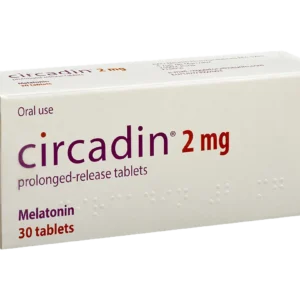
Melatonin
Original price was: £41.00.£37.00Current price is: £37.00.Treat insomnia and jet lag with melatonin tablets, which are prescription-strength sleeping tablets proven to help you get…
-
Wegovy tablets 4mg x 30 tablets
£119.00Please read the official packaging and patient information leaflet for directions, warnings, ingredients, and suitability.
-
Wegovy tablets 1.5mg x 30 tablets
£99.00Please read the official packaging and patient information leaflet for directions, warnings, ingredients, and suitability.
-
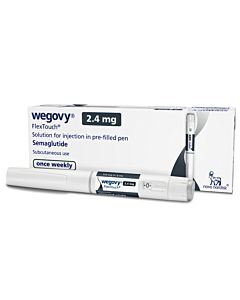
Wegovy 2.4mg Injection
£225.00Please read the official packaging and patient information leaflet for directions, warnings, ingredients, and suitability.
-
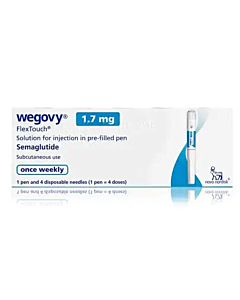
Wegovy 1.7mg Injection
£164.00Please read the official packaging and patient information leaflet for directions, warnings, ingredients, and suitability.
-
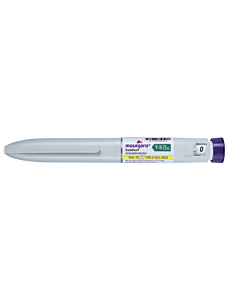
Mounjaro 7.5mg Injection
£249.00Please read the official packaging and patient information leaflet for directions, warnings, ingredients, and suitability.
-
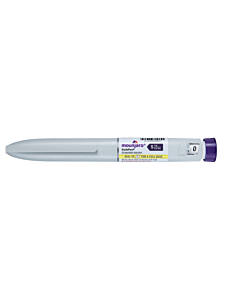
Mounjaro 5mg Injection
£199.00Please read the official packaging and patient information leaflet for directions, warnings, ingredients, and suitability.
-
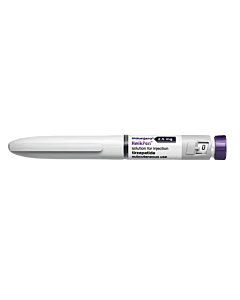
Mounjaro 2.5mg Injection
£179.00Please read the official packaging and patient information leaflet for directions, warnings, ingredients, and suitability.
-
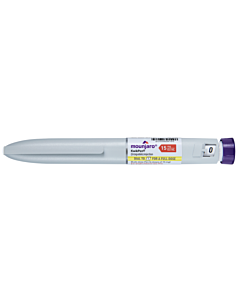
Mounjaro 15mg Injection
£299.00Please read the official packaging and patient information leaflet for directions, warnings, ingredients, and suitability.
-
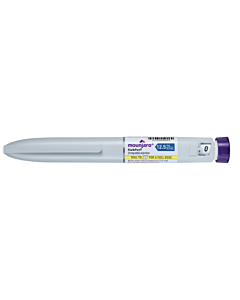
Mounjaro 12.5mg Injection
£289.00Please read the official packaging and patient information leaflet for directions, warnings, ingredients, and suitability.
-
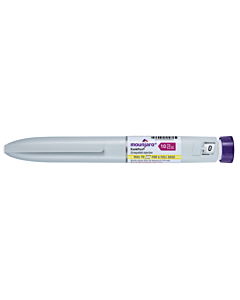
Mounjaro 10mg Injection
£289.00Please read the official packaging and patient information leaflet for directions, warnings, ingredients, and suitability.
-

Wisdom Fresh Effect Coolmint Antibacterial Mouthwash
£0.50Please read the official packaging and patient information leaflet for directions, warnings, ingredients, and suitability.
-

Wisdom Denture Bath
£1.75Please read the official packaging and patient information leaflet for directions, warnings, ingredients, and suitability.
-

Wisdom Dental Sticks
£2.75Please read the official packaging and patient information leaflet for directions, warnings, ingredients, and suitability.
-

Wisdom Clean Between Interdental Brushes: Fine - Blue
£2.50Please read the official packaging and patient information leaflet for directions, warnings, ingredients, and suitability.
-

Ultradex Whitening Tooth Paste
£4.75Please read the official packaging and patient information leaflet for directions, warnings, ingredients, and suitability.
A place to begin
Bring better questions to your next conversation.
Important: Steroid Health Lab provides general educational information. It is not a substitute for personal medical advice, diagnosis, or treatment. For urgent concerns, contact local emergency services.
Questions worth asking before you buy
Before purchasing any medicine online, check who is responsible for the clinical review, whether the product requires a prescription, how your identity and health information are protected, and what support is available after a purchase. Confirm that the product description matches the official packaging and that you understand the returns, storage, delivery, and adverse-reaction process. A legitimate healthcare conversation should leave room for questions; it should never rely on urgency, secrecy, exaggerated promises, or pressure to buy immediately.
For family members and carers, remember that support means helping someone access appropriate care, not selecting medicine on their behalf. Encourage the person to speak with their clinician, help them prepare a medicine list, and respect their privacy. For students and researchers, distinguish educational reference material from clinical guidance and cite primary or recognised sources. For everyone, the safest online decision is often to pause, verify the information, and ask a qualified professional who can see the full picture.
We welcome general questions that help people understand the language of steroid medicines and healthcare. Use the form below to request information, and seek personal medical advice from your own doctor or pharmacist before acting on anything you read here.
Keep learning, keep checking
Medicine information changes as evidence, guidance, product licences, and safety notices are updated. Check the date of an article and use current official information when making decisions. If two sources disagree, do not choose the one that sounds most confident; ask a pharmacist or doctor to explain the difference. Keep your questions, prescriptions, packaging, and follow-up advice together so that every professional involved in your care can see the same information. This habit supports safer conversations and helps you notice when a product, strength, route, or instruction does not match what you expected.
Thank you for using Steroid Health Lab as an educational resource. We encourage careful reading, respectful questions, and personal professional advice whenever it is needed.
Begin with the health question
When people search for a medicine online, they often begin with a product name. A safer starting point is the health question behind the search. Are you trying to understand a diagnosis, a symptom, a prescription you already received, or a claim made in an advert? Each situation needs a different kind of information. A catalogue can describe ingredients and formulations, but it cannot establish whether a medicine is appropriate for a person it has never assessed.
Ask what outcome the treatment is intended to support and how that outcome will be measured. A clinician may be treating inflammation, replacing a hormone, reducing an immune response, improving airway control, or addressing another defined condition. The same symptom can have many causes, and similar symptoms can require very different treatment. Redness, pain, breathlessness, fatigue, or weight change may arise from conditions that cannot be distinguished safely from a product page alone. A qualified professional can consider examination, history, testing, and follow-up.
Separate approved use from an individual hope. Online discussions may describe medicines for purposes that are not supported by the product licence or local guidance. Do not assume that a result reported by an athlete, influencer, forum member, or anonymous reviewer is evidence that a medicine will be safe or effective for you. Ask the prescriber what evidence supports the proposed use and what alternatives are available.
Understand the class before the brand
Corticosteroids are medicines designed to resemble hormones involved in inflammation and immune regulation. They may be prescribed for asthma, eczema, allergic disease, inflammatory bowel disease, and other diagnoses. Anabolic androgenic steroids are substances related to testosterone and involve different goals, legal controls, adverse effects, and monitoring considerations. Using the single word steroid without naming the class creates avoidable risk. Identify the exact active ingredient and formulation before discussing a medicine.
Topical corticosteroids are applied to the skin and are chosen according to the condition, body site, severity, age, and expected duration. A product suitable for one area may be unsuitable for another, especially around the eyes, face, skin folds, or broken skin. More product is not automatically more effective, and a stronger product is not automatically better. Inhaled corticosteroids depend on the correct device, technique, schedule, and diagnosis. A reliever and a preventer do not serve the same purpose. Nasal preparations, tablets, and injections are not automatically interchangeable.
How to review medicine information
Start with the active ingredient rather than relying only on a brand name. Check the strength, form, pack size, and route of administration. These details distinguish products that may sound similar but are not interchangeable. If the label and prescription differ, pause and ask a pharmacist or prescriber before using it.
The indication section explains conditions for which a product may be used. It does not mean every person with a similar symptom should use it. Warnings may refer to infection, diabetes, high blood pressure, eye problems, osteoporosis, stomach problems, mental health history, pregnancy, breastfeeding, or medicines that affect immunity or blood clotting. The relevance depends on your circumstances, so general information cannot replace an individual review.
Interactions can involve prescriptions, over the counter products, supplements, vaccines, alcohol, or recreational substances. Tell your healthcare professional what you take regularly, including products that seem unrelated. Keep a current medicine list with the name, strength, frequency, and reason for use. Follow instructions about storage, expiry, measuring devices, inhaler technique, skin application, and missed doses. Do not share a prescription or use a kitchen spoon to measure liquid unless official instructions say so.
Side effects need context and action
Every medicine has potential benefits and unwanted effects. A leaflet lists many events because it communicates what was reported in studies and monitoring; it does not predict what will happen to you. Ask what is common, what usually settles, and what should prompt a call to your clinician. For severe breathing difficulty, swelling of the face or throat, collapse, chest pain, sudden weakness, a serious skin reaction, or another emergency symptom, seek urgent help rather than waiting for an online reply.
With some steroid plans, duration and pattern matter. A clinician may advise a gradual change rather than an abrupt stop after a longer course. Never copy another person’s tapering schedule. If a product arrives damaged, looks different from expected packaging, or has unclear instructions, contact the dispensing pharmacy.
How to judge health information
Ask who produced information and why. Look for an identifiable organisation, publication date, named sources, editorial standards, and a distinction between education and advertising. Be cautious when a page promises a guaranteed result, uses dramatic language, presents testimonials as proof, or encourages you to avoid medical advice.
A personal story can describe one experience but cannot show that a treatment caused an outcome or that it will happen to other people. A controlled study may provide stronger evidence, while a review can compare results across studies. Even strong evidence has limits: participants, doses, formulations, and outcomes may not match your situation. Words such as natural, research chemical, pharmaceutical grade, stronger, and clinically proven can sound reassuring without explaining regulation, quality control, or suitability.
A product being sold online does not prove its contents, sterility, strength, storage, or supply chain. Compare received items with the prescription, dispensing label, packaging, and leaflet. If anything is inconsistent, contact the dispensing pharmacy or prescriber. Good research communication is comfortable with uncertainty and explains what is known, unknown, and likely to change.
Quality, identity, and supply
Safety depends on more than the name printed on a listing. Identity, strength, sterility, storage history, expiry date, and supply chain can matter. A similar looking product may contain a different ingredient or concentration. Online photographs can be outdated or unrelated to the pack supplied. Compare received items with the prescription and official leaflet. If anything is inconsistent, contact the dispensing pharmacy or prescriber.
Questions to take to your doctor or pharmacist
- What is the exact active ingredient, strength, formulation, and route?
- What condition is this plan intended to address?
- What benefit should we expect and when should it be reviewed?
- What side effects matter and what should I do if they appear?
- Could it interact with current medicines, supplements, alcohol, or health conditions?
- How long should the plan last and is monitoring needed?
- What should I do if I miss a dose or want to stop?
- Where is the official leaflet and who should I contact with questions?
Bring your medicine list, allergies, relevant diagnoses, previous reactions, and the packaging or a clear photograph. Note when symptoms began, what changes them, and whether another treatment was tried. If cost, travel, work, or caring responsibilities affect how you can follow a plan, say so. A realistic plan is more useful than an ideal plan that cannot be followed safely.
Know when to get personal help
Contact a qualified healthcare professional when symptoms are new, persistent, worsening, or difficult to explain; when you are pregnant or breastfeeding; when you take several medicines; or when you have a condition that could change the balance of benefit and risk. Ask for help if you are unsure whether a symptom is a side effect, have missed several doses, or are considering stopping or combining treatments.
Seek urgent care for severe breathing difficulty, chest pain, fainting, sudden neurological changes, severe allergic swelling, serious infection signs, or widespread blistering or peeling skin. If you are in immediate danger, use local emergency or crisis services. Use our contact form for general educational enquiries or preparation for a conversation with your own healthcare professional. Do not include medical records, payment information, passwords, or urgent symptoms.
Steroid Health Lab is organised around clear information before health decisions. We explain vocabulary, show why medicines are not interchangeable, and encourage readers to discuss personal choices with qualified professionals. Our articles and catalogue are not a substitute for diagnosis, prescribing, monitoring, or emergency care. They are a place to begin learning and preparing questions.
Talk to a healthcare information professional
Send a general enquiry about a medicine class, product information, or how to prepare for a conversation with your own doctor or pharmacist. This is not a diagnosis or emergency service. Do not include medical records, payment details, passwords, or urgent symptoms.
Good information connects research with real people


Health education is strongest when it connects evidence to the decisions people face. A photograph of a consultation or laboratory does not prove that a particular medicine is suitable, and it should never be used to imply a diagnosis, licence, or clinical endorsement. Images can help explain a process, but the important questions remain: what was measured, how reliable was the method, who reviewed the evidence, and does it apply to this person?
For weight, metabolic, hormone, or steroid-related concerns, one measurement is only one part of the story. A clinician may consider symptoms, medical history, medicines, family history, examination, laboratory results, and changes over time. The same number can have different meanings in different people. This is why online calculators, photographs, testimonials, and product claims cannot replace a personal assessment.
Laboratory research also requires context. A result from cells, animals, or a controlled experiment may help researchers ask a question, but it does not automatically predict a clinical result. Good educational content explains the type of evidence, the limits of the method, and whether a study has been independently reviewed. It avoids turning early findings into promises.
Use this homepage to prepare thoughtful questions for your doctor, pharmacist, or other qualified healthcare professional. Ask what the evidence means for your situation, what alternatives exist, what monitoring is needed, and when follow-up should occur. If you are worried about an urgent symptom, contact local urgent or emergency care instead of using the contact form.